Chicken
Chicken
(1)kisê-manitô otâpwêwin ôma kâ-masinahikâtêk ôta.
(1)The true word of God is that which is written here.
(2)kîtahtawê kî-itêyihtam kita-kakêskimât otayîsiyinîma, onêhiyâma, ê-kitimâkinawât. pêyak kî-nitomêw kita-kiskinôhamawât masinahikan. êkosi kî-tôtam nam-âwiyak kita-kî-ânwêhtamihk êko ôma kisê-manitôw-itasowêwin.
(2)At one time He decided to instruct his child, his Cree, because he looked upon him with pity. He called one of them to Him to teach him the use of writing. He did so in order that no one should fail to heed this commandment of God.
(3)hâw, êkwa nik-âcimon.
(3)So now I shall tell the story.
(4)mêstanaskowêw kî-isiyîhkâsôw ayîsiyiniw; êwako awa kî-kiskinôhamâkôwisit, masinahikan kita-kiskinôhamâkêt.
(4)Mestanaskuwew was the name of a man; he was the man who received the divine instruction, that he might teach people the use of writing.
(5)kîtahtawê kî-âhkosiw kapê-nîpin. kîtahtawê kî-wîhtamâk awiya ê-wî-nipit; mâka kâwi kita-waniskât kî-pê-itâw. êkosi owîkimâkana kî-âcimostawêw. mahti, kîspin tâpwê kita-kî-ihkiniyik, êkâ kita-nahiniht, nipici, isi natotamawêw owîkimâkana, kîspin nipici. êkosi kinwês kî-âhkosiw. piyisk takwâkin. piyisk ati-pipon. kîtahtawê êkwa nêsôwisiw. ayisk pisisik oskan pimisin; êk-ôhci k-ô-nêsôwisit. âsay kôna ê-apit, kîtahtawê nipiw. êkosi êkwa wî-kakwê-nahinâw; mâka namoya tâpwêhtam iskwêw onâpêma kita-nahinamâht. êkosi piyisk kisîmôwak ayîsiyiniwak.
(5)At a certain time he was ill through the whole summer. Then presently someone told him that he was to die; but he was sent the message that he should arise again. So he told his wife of this. If really it should so come to pass, he asked his wife that he should not be buried, when he died. Then for a long time he was ill. At last autumn came. At last winter came on. Then presently he grew weak. For he lay there, skin and bones; that was why he was weak. When the snow was already on the ground, presently, he died. Accordingly, people wanted to bury him; but the woman would not consent that her husband be buried. Then, finally, the people grew angry at her speech.
(6)êkosi, «kiyâm kita-ka-kanawêyimêw,» itwêwak.
(6)So, «Let her continue to keep him, then,» they said.
(7)êkosi pônimêwak. êkosi ka-kanawêyimêw iskwêw onâpêma. isko nêo-tipiskâw mîna nisto kîsikâwa kî-pimisin onipiw.
(7)Then they ceased urging her. So the woman kept her husband's body. Four nights and three days the dead man lay there.
(8)kîtahtawê kî-tôhkâpiw, ê-pêtâpaniyik, tahki ê-nitawâpênâkot owîkimâkana. mistahi kî-nanâskomôw iskwêw. cikêmâ nama nanâskomôw! êkosi mayaw ê-kiskêyimât kâwi ê-pimâtisiyit, kî-sêsâwinêw misiw-îta. êkosi kî-waniskânêw. sêmâk kî-nitonam opîmôyôwinihk awa nâpêw, mahti kit-âstêyik kâ-kî-miyikôwisit masinahikan. êkosi kî-miskam. êkosi êkwêyâk kî-tâpwêhtam tâpwê êsa ê-kî-nipit. êkosi êkwêyâk tâpwêhtam kahkiyaw, tahto kîkwa kâ-kî-kiskinôhamâkôwisit. namoya ê-ohc-ânwêhtawât kisê-manitôwa, mâka wiya ê-ânwêhtâsot, êk-ôhci k-ô-kî-tôtahk. êkosi êkwa kî-nitomêw kahkiyaw ayîsiyiniwa tahto êkota k-âyâyit, misiwê êkota wâsakâm ê-wîkiyit owâhkômâkana. kî-mâci-kakêskwêw tahto kîkway kâ-kî-wîhtamâkot manitôwa kita-wîhtamawât otôtêma. êkosi kî-tôtam; mîna kî-kiskinôhamâkêw masinahikan.
(8)Then at one time he opened his eyes, at the first ray of dawn, his wife watching all the while at his bedside. The woman gave fervent thanks. And why should she not? As soon as she knew that he had come back to life, she exercised all his limbs for him. Then she raised him up from where he lay. At once that man felt in the bosom-fold of his garment to see if the writing was there which he had been given as a divine gift. He found it. So now first he believed that he really had been dead. Now first he believed all the things, as many as he had been taught by divine instruction. Not that he doubted the word of God, but because he disbelieved his own impressions, was why he did thus. So then he called all the people, as many as were there, his kinsfolk who dwelt all about that place. He began to preach all the things which God had told him to tell his fellow-tribesmen. This he did; and he taught the use of writing.
(9)êkosi ômisi kî-itâcimôw kisê-manitôwa kâ-kî-nitawâpamât. ôta mayaw kâ-nipit aciyaw piko kî-nipêpayiw; ki-itêyihtam. êkosi sâmâk kî-ati-sipwêhtêw, awiya ê-pê-nâtikot. kî-kîwêhtahik ispimihk isi. mikisiwa kî-itêyimêw, mâka ê-sôniyâwipîwayêyit. piyisk kî-otihtam ôma kâ-nôkwahk kîsik. êkota ohci mîna kî-sipwêhtêw. kêyâpic kotak kîsik kî-itohtêw. âsay mîna êko otihtam. mîn-êkota ohci sipwêhtêw. kêyâpic kotak kîsik kî-nâtam. êkota êkwa kâ-kî-nakît. êkwêyâc kî-otihtam ita k-ô-nitawêyimiht. êkwa kî-wâpahtam wâskâhikan, mitoni ê-wâpiskâyik wâskâhikan, kisê-manitôwa wîkiyiw.1 namoya nânitaw kî-nôkwaniyiw iskwâhtêm. iyikohk ê-kanâcinâkwaniyik wâskâhikan ê-wâpiskâyik. mîna ita ê-iskwâhtêmiwiyik, êkota isi kiskiwêhonâhtikwa kî-cimasoyiwa, mîna têhtapiwin êkota ê-astêyik ê-sôniyâwiyik, mîn-ânihi kiskiwêhonâhtikwa ê-sôniyâwâskosiyit. âpihtâ-kîsikâhk kî-itiskwâstawêstêyiw.
(9)And so this was the way he told of how he had visited God. Immediately after he had died, he had been in a state of sleep for only a short while, as it seemed to him. Then at once he had started to go away, someone coming to fetch him. That one took him aloft. He thought that one an eagle, but with plumage of gold. In time he reached this visible sky. From it he set out again. He went to another sky. This too he reached. From it too he set out. He came to still another sky. There he stopped. Only now had he reached the place where his presence was desired. Now he saw a house, a house very white in colour, the dwelling of God. Nowhere could a door be seen, so pure was the appearance of that house in its whiteness. And where it had its door, there a flagstaff rose aloft, and there stood a golden chair. And that flagstaff, too, was a pole of gold. The house had its doorway in the direction of the noonday sun.
(10)êkwa ê-yôhtêpayiyik, kî-nitomik kisê-manitôwa, kita-pîhtokêt, «âstam, nitawâsimis!» ê-itikot. «pîhtokê!» itik.
(10)As the door swung open, God called him to enter, saying to him, «Come, my child! Enter!» he said to him. Enter!» he said to him.
(11)êkosi kî-pîhtokêw. ê-pîhtokêt, kî-wâpamêw pisiskiwa, kahkiyaw kâ-tahtoskânêsit pisiskiw. kîhtwâm kotak ê-ati-pîhtokêt, êkota kî-wâpahtam tahto kîkwa kâ-kî-pê-misi-wanâcihtâcik konita kîkway ayîsiyiniwak.
(11)Accordingly, he entered. When he entered, he saw animals, as many as are the species of animals. When he passed, again, through another door, he saw all the things which mortal men of every sort of ruined in the higher course of time.
(12)nêwâw kî-pîhtokêw; êkwêyâk êkota k-âpiyit kisê-manitôwa.
(12)Through four doorways he passed; only then, there sat God.
(13)«api, nitawâsimis!» itik.
(13)«Sit down, my child!» He told him.
(14)êkosi nahapiw.
(14)Accordingly, he sat down.
(15)êkwa ê-kitotikot, ômisi itik: «ohcitaw ê-nitomitân, nitawâsimis, ê-wî-wîhtamâtân: ôma kâ-tôtamêk, kâ-wîhtikôhkotâtoyêk, nâspic kiwani-tôtênâwâw, êko kâ-tôtamêk kita-pônihtâyêk,» kî-itik; «êkwa mîna ê-wî-miyitân manitôwi-nisitohtamôwin, k-ô-nitomitân. êkwa mîna kahkiyaw kîkway ê-wî-wîhtamâtân, tânisi ê-wî-isîhcikêyan ôtê nîhtaskamik,» kî-itik, «pikiskâc-âskîhk k-âyâyêk.»
(15)Then, when He spoke to him, He told him thus: «I have called you purposely, my child, to tell you: in this which you do, acting as devourers toward each other, you do unmitigated wrong; you are to cease from this which you do,» He told him; «And also because I wish to give you divine understanding, I called you. And also because I wish to tell you all about how you are to do there on the nether earth,» He told him, «you who dwell on the sorry earth.»
(16)êkwa ômisi itik mîna: «nitawâsimis, `ê-owiyawiyân,' cî kitêyihtên?» itik.
(16)Then He said to him also, «My child, do you think, 'I am in my body'?»
(17)«êha!?!» itêw.2
(17)«Yes!» he answered Him.
(18)«namoya kôwiyawin. mâcikôtitân, sâmina kiyaw!» itik.
(18)«You have not your body. See, touch your body!» He told him.
(19)êkwa sâminam wiyaw: nama kîkway miskonam. êkosi ê-kêhcinâhot ê-owiyawit ê-itêyimisot, pisisik ês-ôma otahcâkwa.
(19)Then he touched his body: his hand found nothing. So he knew with certainty that that which he thought he had as his body, it was nothing else than his soul.
(20)êkos-êkwa kâ-mâci-nitomâyit otatoskêyâkaniyiwa okîsikôwa. ôm-îta k-âpicik tâwâyihk wâwiyêyâyiw, masinahikêwinâhtik êkota âyîtaw ê-apicik, tâwâyihk ê-astâyit masinahikan, êkota ê-ati-nahapiyit ôhi okîsikôwa masinahikanêkinohk.
(20)Then he proceeded to summon His servants, the angels. That place in the center of which they sat, was round, and there was a table for writing between them as they sat, in the middle of which lay a written scroll, and there sat those angels upon the paper.
(21)êkosi êkâ ê-ati-wâpamât, piyisk kahkiyaw; iskwêyâc wiya nahapiw. tâpiskôc ê-yîkwawanipayik ispayiw aciyaw. mayaw ê-pasikôt; sêmâk âstêpayiw. êkosi kahkiyaw pasikôwak ôki okîsikôwak kahkiyaw.
(21)Then gradually he ceased to see Him, and at last, all; at the end, he alone sat there. Even as though a thick mist had formed, it was for a while. As soon as he rose to his feet, it grew bright. Then all those angels rose to their feet.
(22)«êkosi nipê-miyik ôma masinahikan,» kî-itwêw.
(22)«Then He came and gave me this writing,» he said.
(23)êwak-ôma kiskinôhamâtôwin nêhiyaw kâ-kî-miyikôwisit ôta nika-masinahên. pitanê mâka ayiwâkês ati-sôhkêpayik ôma masinahikan kâ-nitawêyihtahk manitô, tânisi kâ-wî-isîhcikêhk kisê-manitô kita-wî-ihkin.
(23)This same object of doctrine which the Cree was given by divine power, I here shall write down. May it gain in firmness, this writing which God willed, and may it endure in the form in which God willed it to be made.
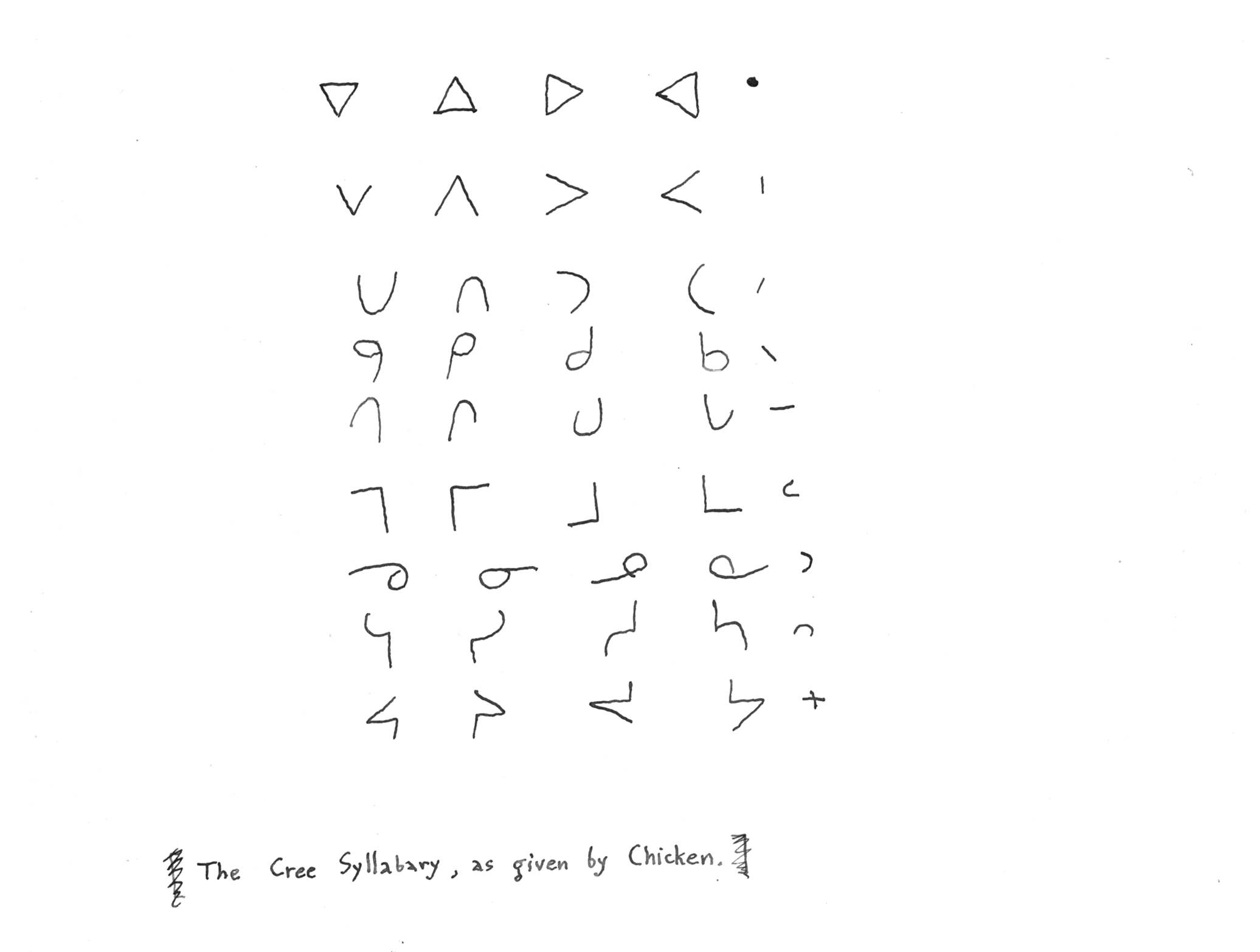
(24)êwak-ôma kiskinôhamâtôwin nêhiyaw omiyikôwisiwin êkosi piko itastêw; namoya ayiwâk kîkway ohc-âstâw manitô.3
(24)This object of doctrine, the Cree's gift of divine origin, is only in this form; God did not set down any more than this.
(25)êkosi êkwa mîna nik-âcimon tânisi kâ-itikot manitôwa mêstanaskowêw. ôma kahkiyaw mêkwâc kâ-pim-îhkihk, êwako kî-âyimôtamiyiwa kahkiyaw, môniyâsak ê-wî-mihcêticik ôm-âskiy misiwê, mîna ôma tânisi k-âyihtôtamiyit kahkiyaw kîkway. piyisk isko kita-pôn-âskîwik kî-âyimôtamiyiwa kahkiyaw kîkwa. mîna nêhiyawêwin kita-pimipayik kî-itasowêw kisê-manitô. mahti tâpwê kika-wâpahtênânaw kahkiyaw kîkwa otitasowêwin. êkosi êko mîna kî-itik, ayamihêw-iyiniwak ôta ê-wî-pê-takosihkik; mâka kî-kitahamâkêw êkâ kit-âyamihâyit nêhiyawa.4
(25)Now I shall again tell of what God said to Mestanaskuwew. All that which now is happening, all that He set forth; that the whitemen were to be many over this land, and all the things that they actually do. Finally, to the end of the earth, He spoke of all things. And God decreed that the language of the Cree was to go on through time. May we truly see in every way all the things which are His commandment. This too, God told him, that the Christian priests would arrive here; but He forbade that the Cree should practise Christianity.
(26)«namoya kiyawâw kâ-kî-miyitakok,» kî-itwêw kôhtâwînaw; «pîtos kiyawâw kikî-isi-pakitinitinâwâw,» kî-itwêw; «ôma piko kika-tôtênâwâw mawimoscikêwin: nipâkwêsimôwin mîna mitêwikamik mîna pîhtwâwikamik. êkosi êkota ohci: kahkiyaw nimâmawôkihtên nanâtohk mawimoscikêwinisa; pêyak nititakihtên. êkosi nêo kâ-miyitakok mawimoscikêwina kit-ô-ohpikihitoyêk, kita-mawimostamêk,» kî-itwêw.
(26)«It is not to you that I have given it,» spoke Our Father; «Otherwise I have created you and set you down,» He said; «Only this will you do in the way of religion: The Sun-Dance and the Medicine-Lodge and the Smoke-Lodge. For this reason: I count alike all forms of religious worship; I count them as one. Thus I have given you four religions with which to ensure your life from generation to generation, and to worship,» He said.
(27)êkosi nêhiyawak, ispi ê-pê-takosiniyit ayamihêw-iyiniwa, ê-wâpamâcik, mistahi manitôwêyimêwak. cikêmâ kayâs ohci kiskêyimêwak manitôwa. êwak-ôhci k-ô-manitôwêyimâcik, mayaw ê-mâ-miskômâyit manitôwa. namoya wîhkâc ohci pê-mac-âyîsiyinîwiwak nêhiyawak. êk-ôhci awa ayamihêw-iyiniw ê-kitotât ayîsiyiniwa, manitôwa ê-mâ-miskômât, sêmâk kiskêyihtamwak nêhiyawak. cikêmâ kâkikê kî-kiskêyimêwak manitôwa. êkosi sîkahâhtawâwak kahkiyaw sêmâk; mistahi pîkonamwak kâ-kî-itikocik manitôwa. êkâ kita-sîkahâhtâkocik ayamihêw-iyiniwa ê-kî-itihcik, âhci piko kahkiyaw kî-sîkahâhtawâwak.
(27)Accordingly, the Cree, when the Christian priests arrived, and they saw him, thought him possessed of great spiritual power. Naturally, since from of old they knew God. That is why they thought the priest to have spiritual power, because at once he discoursed of God. Never, in all the hither course of time, had the Cree been evil men. Therefore, when the Christian priest addressed the Indians, and continued to make God the subject of his discourse, the Cree at once understood. Naturally, since from the beginning of time they had known God. So then they all were baptized, at once; greatly they violated that which God had bidden them. When they had been told not to be baptized by the Christian priest, nevertheless they all were baptized.
(28)«êk-ôhci mâ-mistahi kâ-mâyipayicik môniyâsak, nêhiyaw ê-kipihtinamâht omawimoscikêwin,» itêyihtamwak nêhiyawak; «mâka kîtahtawê kit-êhkin kâwi kit-âyâcik otisîhtwâwiniwâw nêhiyawak mâskôc,» nitêyihtênân mâna.5
(28)«That is why the white people have greater and greater misfortunes, because the Cree's worship has been stopped,» think the Cree; «But doubtless in time it will come to pass that the Cree again shall have their ceremonial,» we always think.
(29)mîna kî-itwêw kisê-manitô; «ôma pîkiskwêwin nêhiyawêwin mâmawô ê-miywâsik,» kî-itwêw; «mîna ê-pîsakwahk pîkiskwêwin ôma nêhiyawêwin.»
(29)Again spoke God; «This language, the Cree language, is the best of all,» He said; «And a rich language is this tongue of the Cree.»
(30)êkosi nêhiyaw mitoni pîwêyimik môniyâsa kahkiyaw. tânêhki êtokê k-ô-tôtahk, ê-miywâtisicik nêhiyawak k-ô-pîwêyimihcik? konita êtokê ê-mohcowiyit awiya, k-ô-pîwêyimikocik, ê-kitimâkisicik ohci êtokê. mâka wiya manitô namoya pîwêyimêw otayîsiyinîma; ayisk kî-miyêw mistahi kîkwa. askiy ê-misâyik kî-miyêw, mîna pîkiskwêwin ê-miywâsiniyik. êkosi êkota ohci kiskêyihtâkwan ê-kihcêyimât onêhiyâma. kîspin awiyak êkâ kiskêyihtahki êwak-ôma, mitoni apisîs kiskêyihtam kîkwa, êkâ kita-kiskêyihtahk ê-kitimâkêyihtâkosicik nêhiyawak ispimihk ohci. cikêmâ wîstawâw kî-osîhâwak, kita-waskawîcik ôta askîhk; êwak-ôhci kiyâm kita-kî-miyo-kitâpamihcik ôta waskitaskamik. âta ê-kitimâkisicik, kita-atamihâw awîna kâ-tipêyimât.
(30)Now the Cree is greatly looked down upon by all the whites. Why, I wonder, does he do so, that the Cree, who are good, are looked down upon? Because someone is merely foolish, is why they are looked down upon, -- because they are poor, for all I know. But God Himself does not despise his Indian; for He has given him many things. Good land He has given him, and a good language. From this, then, it is known that He thinks highly of His Cree. If anyone should not know this same, very little does he know, not to know that the Cree are the recipients of special favor from on high. For plainly, they too were created that they might move about on this earth; therefore let them be favorably looked upon here on the surface of the earth. Even though they are poor, well may he feel a sense of obligation, whoever rules over them.
(31)mâskôc êkosi êwak-ôma aspin kâ-kî-ihkihk ayênânê-mitanaw mîna nîso askiy mâskôc ispayiw, aspin kâ-nîhtinahk masinahikan kâ-tipêyihcikêt.
(31)Perhaps now, since this same came to pass, eighty-two years, perhaps, have gone, since He sent down writing, who rules over things.
(32)êkosi mîna ômisi kî-itik: «namoya kinwês kika-kî-pimâtisin. kînikâw kika-nipahikon,» kî-itik kisê-manitôwa.
(32)And this, too, He told him: «Not long shall you be able to live. A cutting edge will be the death of you,» God told him.
(33)êkosi kî-ispayiw. kî-nipahâw cîkahikan ohci. ayisk wîsta kî-nipahêw wîci-ayîsiyiniwa omamâhtâwisiwin ohci. êwako ê-tipahahk omâyi-tôtamôwin ohci k-ô-tôtâkôwisit. kî-kiskêyihtam êkâ kinwês kita-pimâtisit. kî-wîhtam êkosi ê-kî-itikot kisê-manitôwa. namoya nâspic ohci kisêyiniwiw kâ-nipahiht.
(33)Even so it happened. He was killed with an axe. For he had killed a fellow-man on account of chagrin at a loss in gambling. It was in retribution for this his evil deed, that the Higher Powers dealt so with him. He knew that he should not live long. He had announced that he had been told thus by God. He was not so very old when he was killed.
(34)wâhyaw nâtakâm kî-otaskîw awa k-âcimiht. piyisk ôtê kî-pê-takosin, ê-wî-kakwê-pêtât omasinahikan, êkosi ê-kî-itikôwisit, ôtê kita-pêtât anima masinahikan, nêhiyawa kita-pê-miyât. êkosi kî-tôtam.
(34)Far to the north dwelt he of whom this tale is told In time he came here, on the errand of bringing his writing, having received this divine mission, to bring here that art of writing and give it to the Plains Cree. Even so he did.
(35)«namoya kiyawâw ê-miyitakok,» ê-kî-itiht, êkosi kî-miyêw nîso kisêyiniwa.
(35)«It is not to you and yours alone that I give it,» he had been told, and accordingly gave it to two old men.
(36)pêyak wâwikanihk-k-ôtamahoht kî-isiyîhkâsôw; kotak micêwâyis kî-itâw. êkosi sêmâk kî-kiskêyihtamwak, mayaw ê-pê-miyihcik ôma masinahikan; ayisk wîcihikôwisiwak kita-kiskêyihtahkik; êwak-ôhci k-ô-kiskêyihtahkik; mitoni kiyipa mîna nâspic kî-kiskêyihtamwak. êkosi kî-ânwêhtawâwak kita-kî-kiskêyihtahkik masinahikan; konita ê-tôtahkik kî-itâwak; piyisk kî-pâhpihâwak.
(36)One was called Struck-on-the-Spine; the other was called Little-Medicine-Fellow. Then at once they knew it, as soon as they were given this writing; for they were divinely aided that they might know it; that was why they knew it; very quickly and thoroughly they knew it. Consequently they were disbelieved as to their understanding the art of writing; it was said of them that they were merely pretending; at last they were laughed at.
(37)êkosi êkwa anohc kahkiyaw awiyak ayâw ôma masinahikan; namoya êkwa pâhpihtâw awiyak.6 kêhcinâhôwak êkwa tâpwê ê-nisitohtahkik kahkiyaw ayîsiyiniwak. namoya mihcêt êkwa êkâ kâ-nisitawinahkik ôma masinahikan. anohc êkosi nam-âwiyak okiskinôhamâkêw ihtakôw; kêyiwêhk tahki ayiwâk ati-sôhkêpayiw kita-kiskêyihtamihk. êkota ohci nitâpwêhtên kâkikê kit-êhtakon ôma masinahikan. âta êkâ awiyak ê-okiskinôhamâkêwit, tahki ayiwâk ati-kiskêyihtâkwan. ayisk êkosi kî-itwêw kâ-kî-osîhtât, ê-kiskêyihtahk ê-kitimâkisiyit otawâsimisa, ê-miyât kîkway piko wiya kita-pimipayihtâyit. namoya katâc sôniyâw kita-tipahikêhk kita-kiskinôhamâtohk; ayisk kî-mosci-mêkiw, piko êkosi kita-tôtamihk, kita-mosci-kiskêyihtamihk. êk-ôhci k-ô-tôtahk, êkâ sôniyâwa kita-tipahikêwiht. ê-kî-kitimâki-pakitinât otawâsimisa. êk-ôhci k-ô-kî-tôtahk êkâ awiya kita-kiskinôhamâkêyit, «piko awiyak wî-kiskêyihtahki. kita-kiskêyihtahk,» ê-itêyihtahk, k-ô-isîhcikêt kôhtâwînaw.
(37)But today everyone has this art of writing; now no one laughs at it. All the people are certain that they really do understand it. There are not many now who cannot read this writing. And today there is no teacher; even so the knowledge of it flourishes more and more. That is why I believe that this writing will exist forever. Although no one acts as an instructor, it is known more and more, all the time. For thus decreed He who created it, when, knowing that His children were poor, He gave them something which they alone should carry on through time. By no means should money be paid when people teach it to one another; for He gave it without pay, that only so it might be done, that it might be known without pay. He did so that there might be no paying of money. Because He had set down His children in poverty, that was why He made it that there should be no teacher of it by trade, thinking, «If anyone, no matter who, desires to know it, let him know it,» that was why our Father did it thus.
(38)êkosi êkwa mîna kî-itwêw kit-âpacihtâyit ayamihêw-iyiniwa ôma masinahikan. êkosi tâpwê êkosi tôtamwak ayamihêw-iyiniwak. otinamwak ôma. mâka kotak kîkwa namoya tâpwêwakêyihtamwak otitwêwiniyiw; ôma piko masinahikan tâpwêhtamwak. êkosi ôhi kotaka pîkiskwêwina namoya tâpwêwakêyihtamwak. tânêhk-êtokê k-ô-tôtahkik? êkosi kahkiyaw âta ê-tâpwêhtahk ôma âcimôwin, manitô otitwêwin.7 aspin ayênânê-mitanaw nîsosâp askiy kâ-kî-ihkihk êk-ôma; êkospi nam-âwiyak kî-ayâw ôta môniyâw mîna ayamihêw-iyiniw.
(38)And also He said that the Christian priest should use this writing. Therefore indeed the Christian priests do even so. They have taken up this thing. But the rest of what the others say they do not consider as truth; only this writing they believe. They do not consider as truth these other discourses. Why, I wonder, do they so? Surely, one ought to believe all of this story, the utterance of God. It is eighty-two years since this took place; at that time there was no white man here, and no missionary.
(39)êkosi kahkiyaw kî-wîhtam ôma. mêkwâc k-ây-ihkihk kahkiyaw kî-âcimostawêw ayîsiyiniwa mêstanaskowêw kâ-kî-itiht, kihci-kîkwa kâ-kî-miyikôwisit, kita-miyât otôtêma. tâpwê wîsta kita-kî-tâpwêhtâht, ê-kî-nipit; namoya ê-pawâtahk kita-kî-tâpwêhtamihk. wîsta kisê-manitô okosisa nama cî êkosi mwêhci kâ-kî-tôtahk. nisto-kîsikâw kâ-kî-pimisihk, ispi kâ-wî-tâpwêt? tânisi ê-itêyihtahk kita-tâpwêhtâht ê-nitawêyihtahk? kî-nipahâw; nisto-kîsikâw kî-pimisin. êkosi ê-kî-tôtahk kî-tâpwêhtawâw tânisi kâ-kî-isi-nitawêyihtahk; êkwêyâk kî-tâpwêhtamwân opîkiskwêwin. mwêhci êkosi ôma âcimôwin k-âcimohk, mêstanaskowêw otâpwêwin, âta wiya nam-âwiyak kita-kî-tâpwêhtahk; ayisk osâm kayâs kâ-kî-ihkihk. nânapêc cî ka-tâpwêhtênânaw, âsay kayâs kâ-kî-nitawêyihtahk kita-tôtamihk? êko ôma âta wiya kisêwâtisiw kîspin tôtamihk. mâskôc kêyâpic kita-minw-âstâw kîkwa tânisi kâ-wî-tôtâkoyahk. mistahi tahki kikisiwâhânaw, nanâtohk k-ô-ispayiyahk macipayiwin ohci, sisikoc kîkwa k-êhkihk. êko macipayiwin wiya âhkosiwin nama cî ohcitaw kî-kiki-nihtâwikiw ayîsiyiniw? wiya êko pêyâhtik nâtikôw awiyak k-âhkosit, tâpiskôc ê-wîhtamâhkohk ê-wî-mâyipayit itêyihtâkan. mâka yôtin êko mâyipayiwin, mîna kâ-pîkopayik askiy êko mîna mâyipayiwin, mîna kâ-saskisohk awiyak, êko mîna nipiy kâ-misi-wanâcihikot, êkoni mâyipayiwina k-êtamihk, pitanê mâka pônipayiki êkoni; kita-nanâskomonâniwiw, mihcêtwâw ê-kîsinâcihikocik awâsisak, êkâ cêskwa kîkwa ê-ayâcik kêhcinâ wiyawâw pâstahôwin. osâm mihcêtiwak mac-âyîsiyiniwak nanâtohk kîkwa ê-wanâhikocik k-ô-mac-âyiwicik, nanâtohk k-ô-tôtahkik kîkway. mistahi âyiman kwayask kit-âstêk askiy. nam-âwiyak kita-kî-kwayask-astâw. maskôc ahpô kisê-manitô namoya kaskihtâw kwayask kita-kî-astât mitêha; wiya askiy kwayask kî-astâw. âta ê-tipêyihtahk, mâka ohcitaw kî-tôtam, opîkiskwêwin kit-âpataniyik, katâc mahti kita-natohtâht ê-nitawêyihtahk. ayisk awiyak ê-tipêyihtahk kîkwa piko kita-pîkiskwêt, âkosi ta-tôtamihk; êkosi êkâ tôtamihki, kita-pasastêhôwêw, êkosi piko kita-tôtahk.
(39)So he told all of this. All that is happening even now, Mestanaskuwew told the people, as it had been told to him, when he had been given great gifts by divine power, that he might give them to his fellow-tribesmen. Truly, he ought to be believed, since he had died; one ought to believe that he did not dream it. Did not God's Son himself do even so, lying dead for three days, what time He desired to be believed? What plan did He think out, when He wished to be believed? He was slain; He lay dead for three days. When He had done this, then He was believed as He desired; then at last His speech was believed. But this story which is being told, the true story of Mestanaskuwew, no one is to believe; because, forsooth, too long ago it happened. Are we going to give credence when it is too late, seeing that it was desired of us long ago? He is gentle with us, if it is done. Perhaps it will be well again with us, the way things are for us. Greatly we always anger Him; that is why we fare so, with disasters, when sudden things occur. As for this calamity, disease, was not man really born with it? But one who is sick is slowly carried off by it, as though there were announcement made of the plan that he was to fare ill. But wind, this calamity, and this calamity that the earth is rent, and that one is burnt, and this too, that one is destroyed by water, these which are called disasters, would that they might cease; there would be thanksgiving since so often the children have been made to grieve, since they have not yet surely any thunderbolt. Too numerous are the bad people who have been led astray by different things so as to be evil persons, and to do all manner of things. It is very hard that the earth be at peace. No one can bring it to righteousness. Perhaps even God is not able to set people's hearts aright; He who set the earth to rights. Although He rules it, perhaps by design He did thus, that there might be use for His speech, on purpose that He might be listened to as He desired. For, if anyone be ruler of a thing, he need but speak, and it is thus done; and if it be not thus done, he may chastise, that only so it may be done.
(40)êkosi êkwa nipôn-âcimon anohc wiya êkwa.
(40)And so now I cease my discourse for this time.